
I wasn’t just visiting Panchimalco—I was coming home.
I was born in El Salvador but exiled when I was still a child, separated from my roots by war, distance, and time. For most of my life, I only carried fragments of this land—stories, scents, the sound of my name said with a Salvadoran lilt. But recently, something in me shifted. I needed more than memories. I needed to walk the streets, hear the voices, and feel the spirit of the place I came from.
That search led me to Panchimalco.
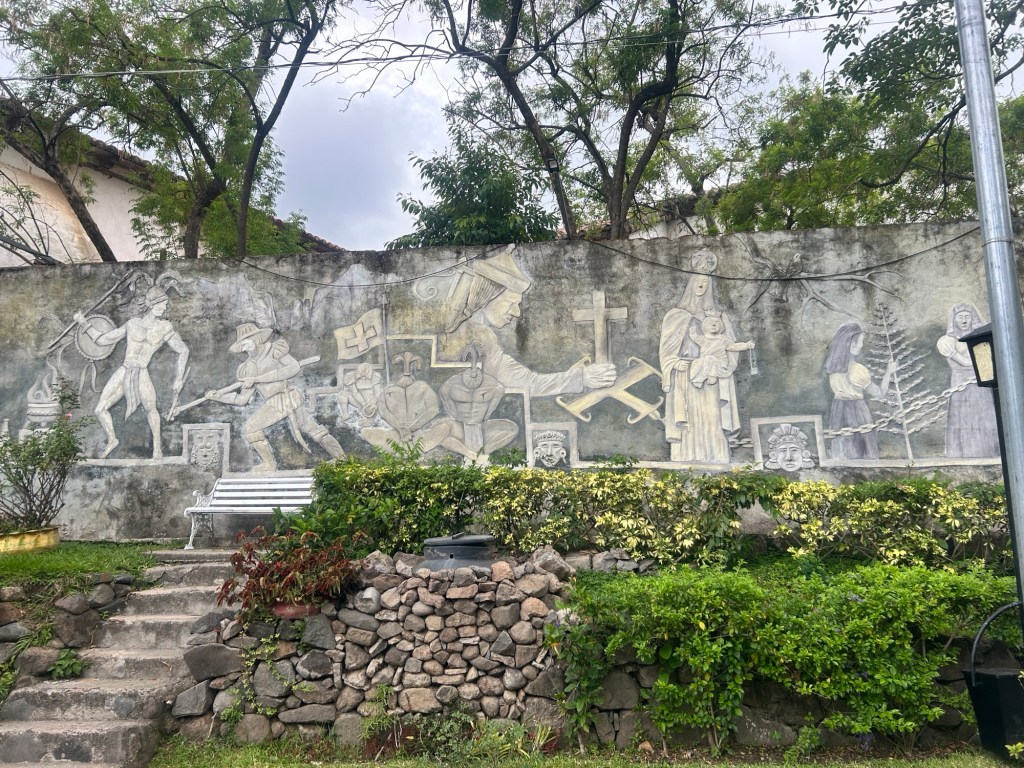
Tucked into the mountains just outside San Salvador, Panchimalco is more than just a beautiful colonial town—it’s one of the few places where El Salvador’s Indigenous identity still breathes openly. It’s home to descendants of the Pipil people, and it’s one of the last places in the country where the Nahuat language is still spoken and being revived.
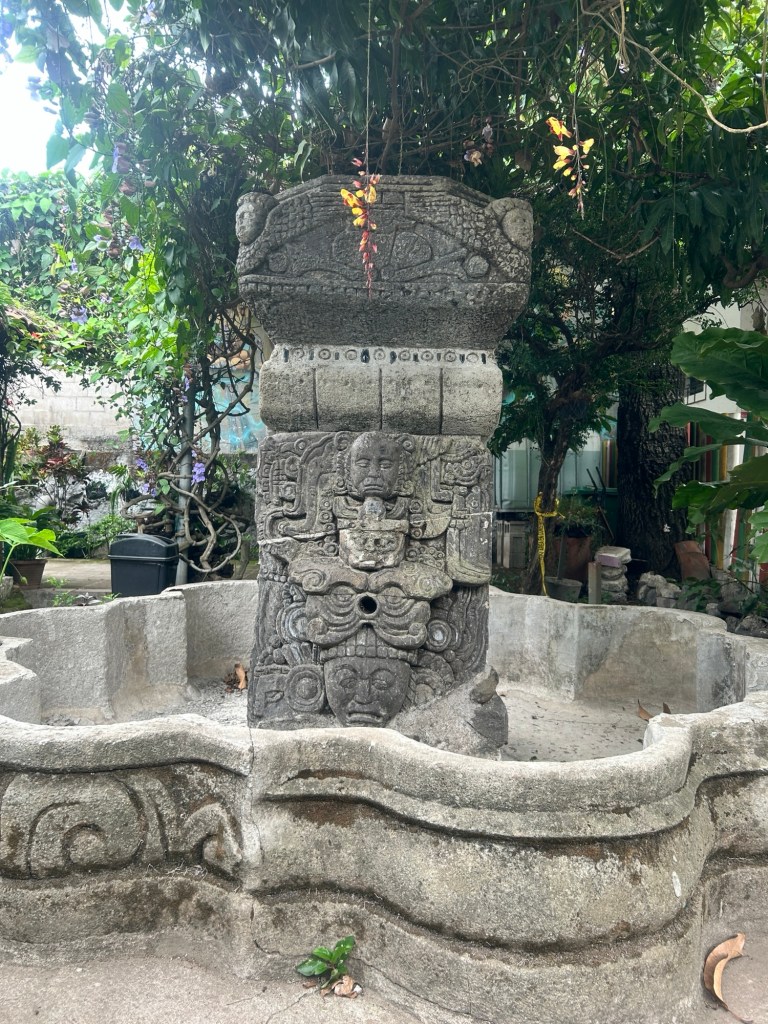
Growing up, I was taught—directly or not—that the more European your features, the more you were worth. Our Indigenous roots were something to hide, something to feel ashamed of. But now, I’m older. I’m unlearning that shame. I’m reclaiming the parts of me that colonization tried to erase.

Panchimalco felt like a mirror I didn’t know I needed.
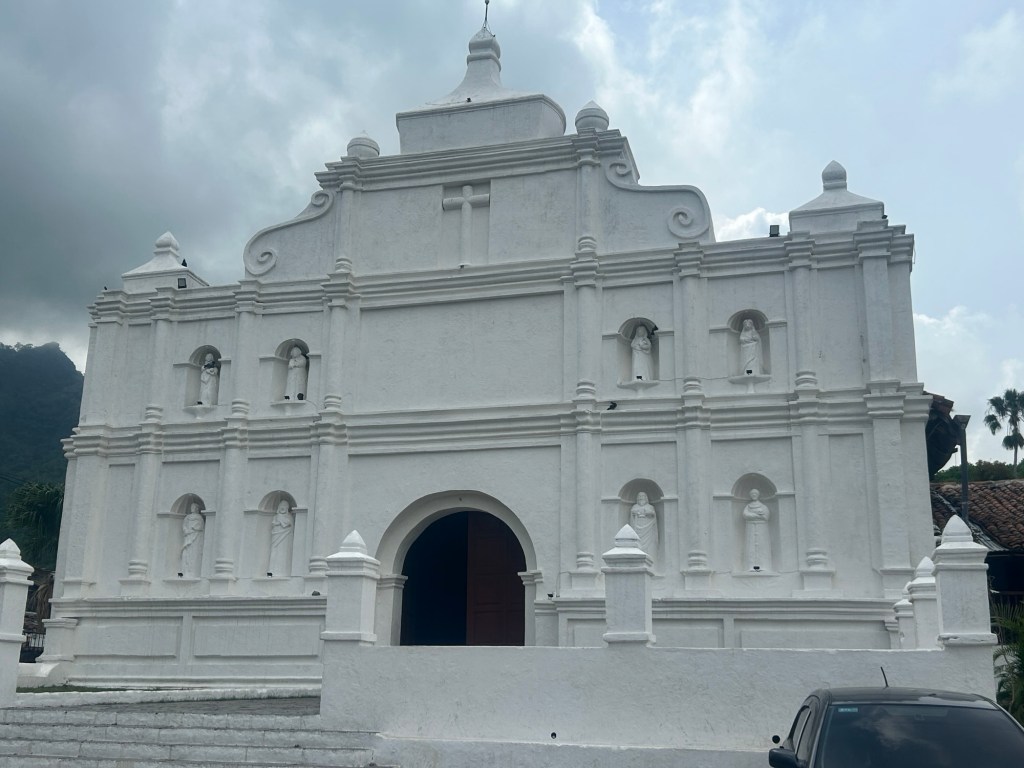
At the heart of the village is the Iglesia de la Santa Cruz de Roma, one of the oldest surviving colonial churches in the country. Its whitewashed walls and wooden beams hold centuries of stories—some painful, some beautiful, all part of who we are. Walking through it, I thought about the duality of this land. How faith was once used as a tool of conquest, and how it now lives alongside Indigenous pride in a kind of uneasy but necessary coexistence.
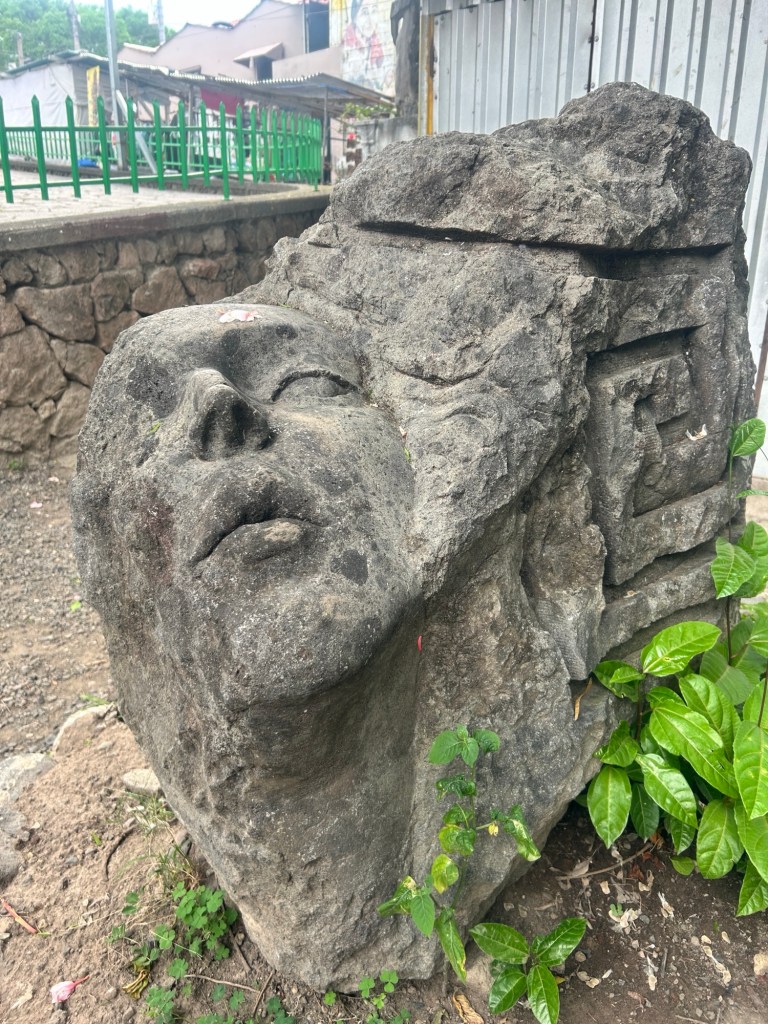
Just down the road is the Parque de las Estatuas—a joyful, vibrant tribute to Pipil culture. Giant sculptures line the cobblestone streets, each one bold and proud. Kids climb them, artists pose with them, and I stood in awe, thinking: this is what survival looks like. This is what resistance looks like. This is what home looks like.
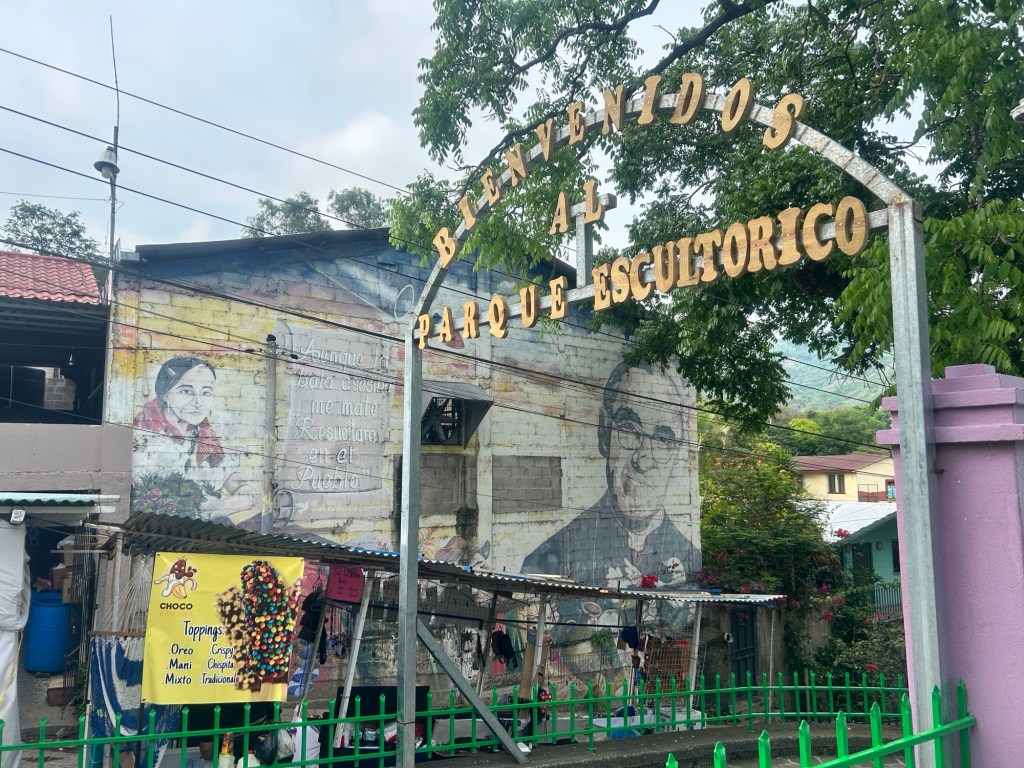
Panchimalco isn’t just a tourist stop—it’s a living, breathing piece of our story. For Salvadorans like me—those of us who were displaced, erased, or disconnected—it’s a place of reconnection. A reminder that our roots are still here, waiting for us.
I came to Panchimalco looking for answers, and I left with something even better: belonging.
If you go:
- Panchimalco is about 40 minutes from San Salvador by car.
- Don’t miss the Feria de las Flores y Palmas in May—one of the most beautiful celebrations of Indigenous and Catholic traditions.
- Walk through the Parque de las Estatuas and support local artists and musicians artisans.
- Talk to people. Listen. There’s a quiet strength in this town, and it will move you if you let it.
This was more than travel. This was healing.
 Mary in Vancity
Leave a comment