

There’s something naughty about sneaking away for a mid-day wine luncheon—especially when it involves discovering a region as captivating as Abruzzo, Italy. Recently, I had the pleasure of joining a tasting hosted at the Vancouver Club, where we explored the wines of this lesser-known but incredibly dynamic region. Let’s just say, I came for the Pecorino and stayed for the Porchetta (and the people—I ran into so many familiar faces!).
Abruzzo: Italy’s Green Gem
Before diving into the wine, let’s set the scene. Abruzzo is one of Italy’s oldest wine-growing regions and a bit of a hidden gem. Bordered by the Apennines and kissed by the Adriatic Sea, this region enjoys the best of both worlds—mountain protection and Mediterranean breezes. It’s often called the “Green Region of Europe” because over 30% of its land is protected parkland. That dedication to preservation carries over into the vineyards, where tradition meets innovation in every glass.

Our speaker Davide Acera painted a vivid picture of a region in motion. While past generations sold their grapes to cooperatives, today’s winemakers—many from the younger generation—are bottling their own wines and leaning into quality, terroir, and storytelling.
Let’s Talk White Wines: Pecorino Steals the Show
No, not the cheese (although that would be amazing too). Pecorino is a native grape variety that vanished around the 1950s and made a comeback in the late ’80s. Today, it’s having a moment—and after this tasting, I understand why.
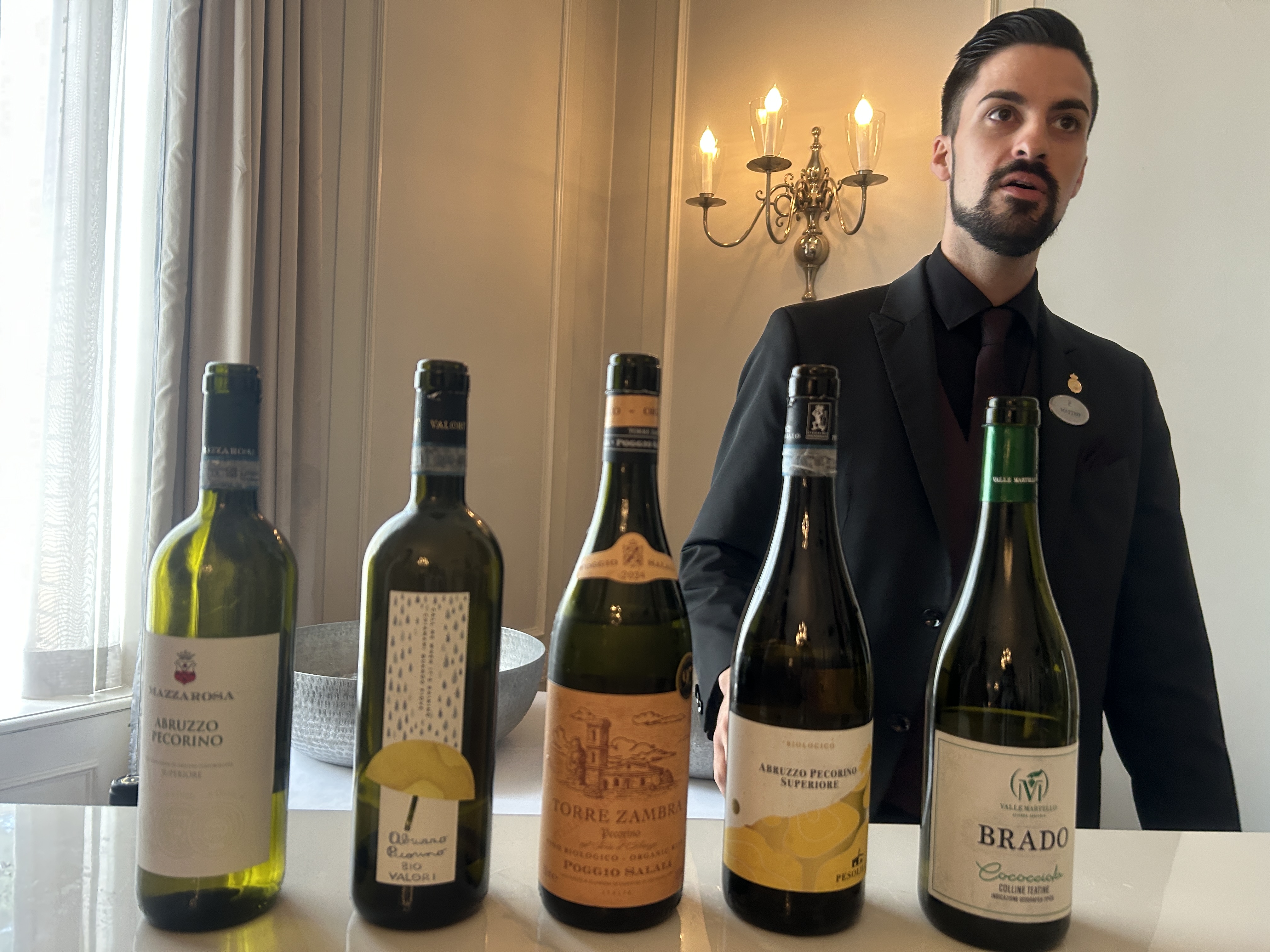
We tried several standout Pecorino wines:
- Torre Zambra Poggio Salaia Pecorino 2023 – Full-bodied and beautifully balanced, with citrus, apricot, white rose, and acacia. It had a salinity that made it sing alongside food.
- Valori Abruzzo Pecorino – Bright stone fruit notes, a gentle prickle of acidity, and an elegant, dry finish. It paired beautifully with the Porchetta.
- Mazza Rosa Pecorino – Pine needles and tropical fruit, with round body and acidity that played well with our creamy Parmesan Wheel Risotto.
- Valle Martello Brado Cococciola – Okay, technically not Pecorino, but a vibrant white with peach, pine, and crisp apple notes. A great discovery!
Each wine was distinct—some with floral aromatics, others leaning into stony minerality or spicy depth.

Abruzzo Reds: Montepulciano in All Its Glory
Of course, no tasting of Abruzzo is complete without Montepulciano d’Abruzzo—the region’s flagship red. We tried three versions that showcased the grape’s range:
- Tenuta Cerulli Spinozzi Cortalto DOCG – Juicy berries, soft tannins, and a peppery kick. Bright, fresh, and very drinkable.
- Tenuta Cerulli Spinozzi Torre Migliori DOCG – Deeper, more structured, with oak and dark fruit. Full-bodied and built for food.
- Casina del Colle Mammut 2020 – Acid-driven, smooth, and just the right amount of grip. I kept coming back to this one.
Fun fact: Montepulciano is also used to make Cerasuolo d’Abruzzo, a deep pink rosé with a cherry hue. Think of it as the farmer’s wine—rustic and hearty, like a rosé that lifts weights.
Lunch Pairings: Where Wine Meets Comfort Food
We were treated to a simple but divine menu that highlighted how well these wines pair with food:
- Porchetta with salsa verde on a milk bun – Juicy, salty, and herbaceous, it was well paired with the Valori Pecorino. That stone fruit and acidity cut through the richness perfectly.
- Parmesan Wheel Risotto with lemon asparagus and fresh herbs – Creamy, lemony, and bright, it brought out the aromatics in the Mazza Rosa Pecorino.
Would it have been too much to ask for seconds? Asking for a friend.
Abruzzo is a region of contrasts: wild yet refined, old-world yet forward-thinking. Its wines are approachable, food-friendly, and offer incredible value.

 Mary in Vancity
Leave a comment