
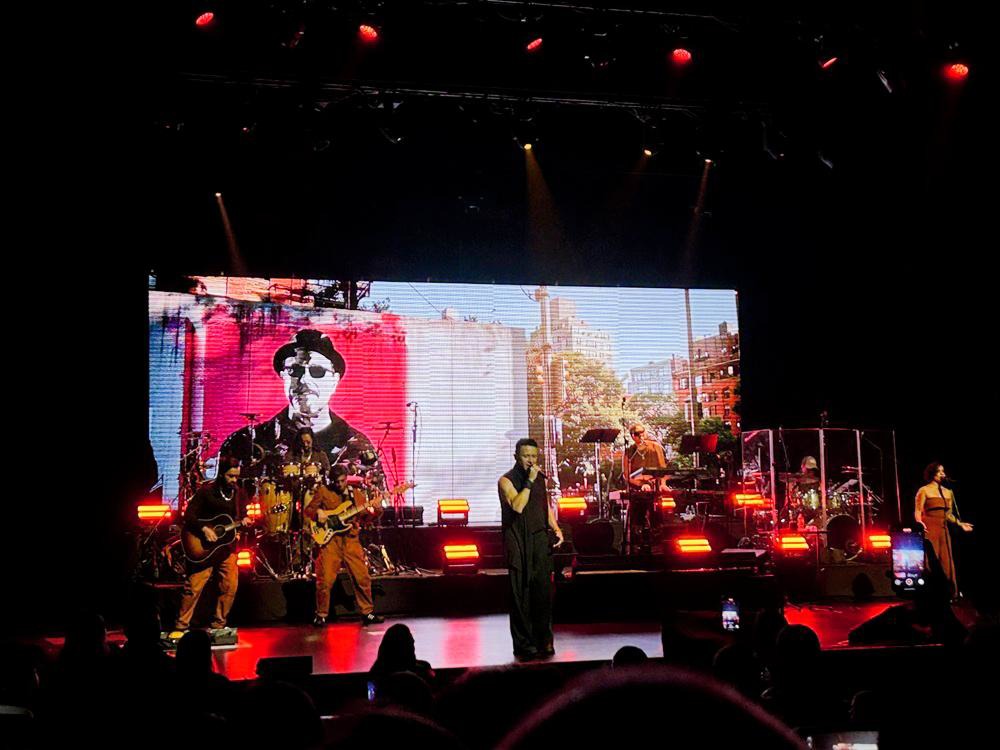
There’s a line in Fonseca’s song, “De Dónde Vengo,” that hits like a wave: “No importa dónde estés, siempre llevas tu tierra contigo.”
No matter where you are, you carry your homeland with you.
I came to Canada in 1986, a kid carrying more questions than memories. We arrived as refugees from the war in El Salvador — a family trying to find peace in a place we didn’t yet understand.
I was so tired of running. By the time I was twelve, I had had so many addresses I couldn’t keep count. One day, one country; another the next. All that mattered was finding a place to call home, belonging so badly that the pieces that made me different slowly started to disappear.
The curly hair was straightened until it looked like everyone else’s. My name was changed so it would be easier to pronounce. Spanish was pushed away, even at home. Even the sun became something to avoid, just to keep my skin as pale as possible.
Blending in felt safer. Disappearing into the crowd felt easier. Sounding like the country I was trying to call home felt like survival.

But here’s the thing about your roots: they don’t die just because you bury them. They wait. Quietly. Patiently. Although I felt like a nomad, Latin America has always been home, even if I tried my hardest to ignore the call.
Years later, I found Fonseca.
Not the first time I heard him — the first time I listened.
Born in Bogotá, Fonseca’s music blends pop and vallenato, a rhythm born on Colombia’s Caribbean coast where joy and longing live side by side. His songs carry the heartbeat of Latin America — love, loss, family, resilience. The kind of music that finds you when you’re far from home and reminds you who you are.

When I heard De Dónde Vengo, it felt like he’d written it for people like me. People who left everything behind but still hum the old songs in their sleep. People who carry two passports but only one soul.
This October, I had the chance to see Fonseca live in Vancouver crack open inside me. It wasn’t nostalgia — it was belonging.
As I listened, I remembered the taste of tamales wrapped in banana leaves, the hum of Spanish lullabies, my mother’s voice rising above the radio. I remembered who I was before I tried to disappear.
It’s hard, being part of two worlds. You learn to switch languages mid-sentence, switch selves mid-heartbeat. You’re never fully from here or there — always somewhere in between. Some days, that space feels like a bridge. Other days, it feels like a wound.
And I realized this story isn’t only mine. It belongs to all of us who crossed borders with hope in our suitcases and loss tucked quietly behind our eyes. To those who built new lives in cold cities while dreaming in another language. To those who loved two countries, but belonged completely to neither.
Now, I wear my name with pride. I let my curls fall wild. I talk with my hands, speak with my accent, and dance (badly!) when the rhythm calls. I’ve learned that belonging isn’t about erasing — it’s about remembering, it’s about learning and loving yourself… all of you.
When Fonseca sings De Dónde Vengo, I close my eyes, and I know.
I know where I come from.
And I know that I carry it with me, everywhere I go.
If you’ve ever felt torn between worlds, this one’s for you. May you always find your way back — through music, through memory, through love.



Leave a Reply